The Rise of the New Normal
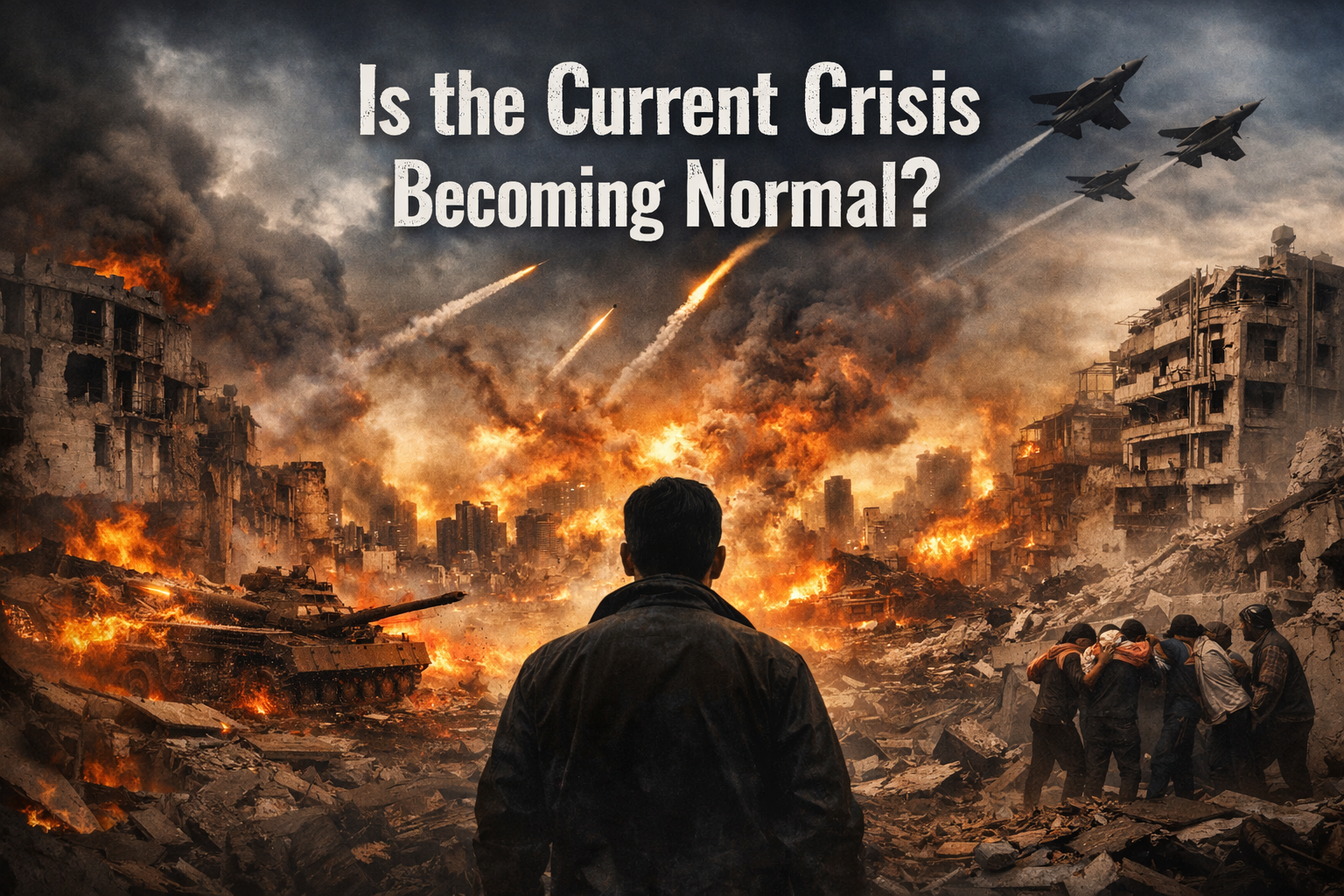
There is always conflict somewhere in the world. But lately, it feels like the scale is changing. Russia and Ukraine. Israel and Palestine. Afghanistan and Pakistan. And now the growing tension involving the United States, Israel, and Iran. And maybe in future China and Taiwan...
What unsettles me is not only the violence itself, but how quickly human beings adjust to it. The meaning of normal does not stay fixed. It stretches. It absorbs. It rises each time the world shocks us. What once felt unbearable slowly becomes familiar. What once felt like a historic rupture becomes part of the background of ordinary life.
When Russia attacked Ukraine in 2022, the world stopped and stared. For many people, it felt like something unthinkable had returned. Every death seemed to matter. Every image carried moral weight. The war touched everything: emotion, food, inflation, markets, energy, daily life. It was not distant in the way wars often appear to be. It entered the psychology of the world.
But time passed. People returned to work. They resumed routines. They worried about rent, school, health, and family. The war remained, but attention weakened. The shock lost its edge. Slowly, what was once unthinkable became something people learned to live alongside. It became, in a quiet and disturbing way, normal.
Then came the devastation in Gaza through the Israel and Palestine conflict. Again, there was outrage. Again, there was grief. Again, there were images that seemed impossible to ignore. But once more, time did what time often does. It dulled the force of repetition. The deaths continued, but the human mind, unable to remain in a permanent state of alarm, began adjusting again. And the threshold of what the world could absorb rose one more level.
Now tensions around Iran seem to be pushing that threshold even further. And it leaves me asking a question I do not want to ask: is this how World War III begins?
Perhaps great wars do not begin with one final explosion. Perhaps they begin in the human mind much earlier. Not with a single event, but with repeated exposure. Not when the first missile is fired, but when people slowly become used to hearing about missiles at all.
If a full global war arrived all at once, people everywhere would recoil. They would panic. They would lose faith in the systems that claim to preserve order. The shock would be too direct. But smaller conflicts are different. Human beings can adapt to increments. A step at a time, the unacceptable becomes tolerated. Then tolerated becomes expected. Then expected becomes normal.
That is what frightens me. Maybe the greatest danger is not only war itself, but the way war trains the mind to accept more war. The default state of the world shifts upward, little by little, until crisis no longer feels like crisis. It simply feels like reality.
I hope this fear is wrong. I do not want a third world war. But I cannot ignore what seems to be happening around us. The bar keeps rising. The world keeps adjusting. And people keep learning how to live beside what should have never become ordinary.
Maybe that is how disaster enters history, not as a sudden monster, but as a series of tolerable changes.