Kleptocracy: How It Wins Public Support and Why It Matters in America
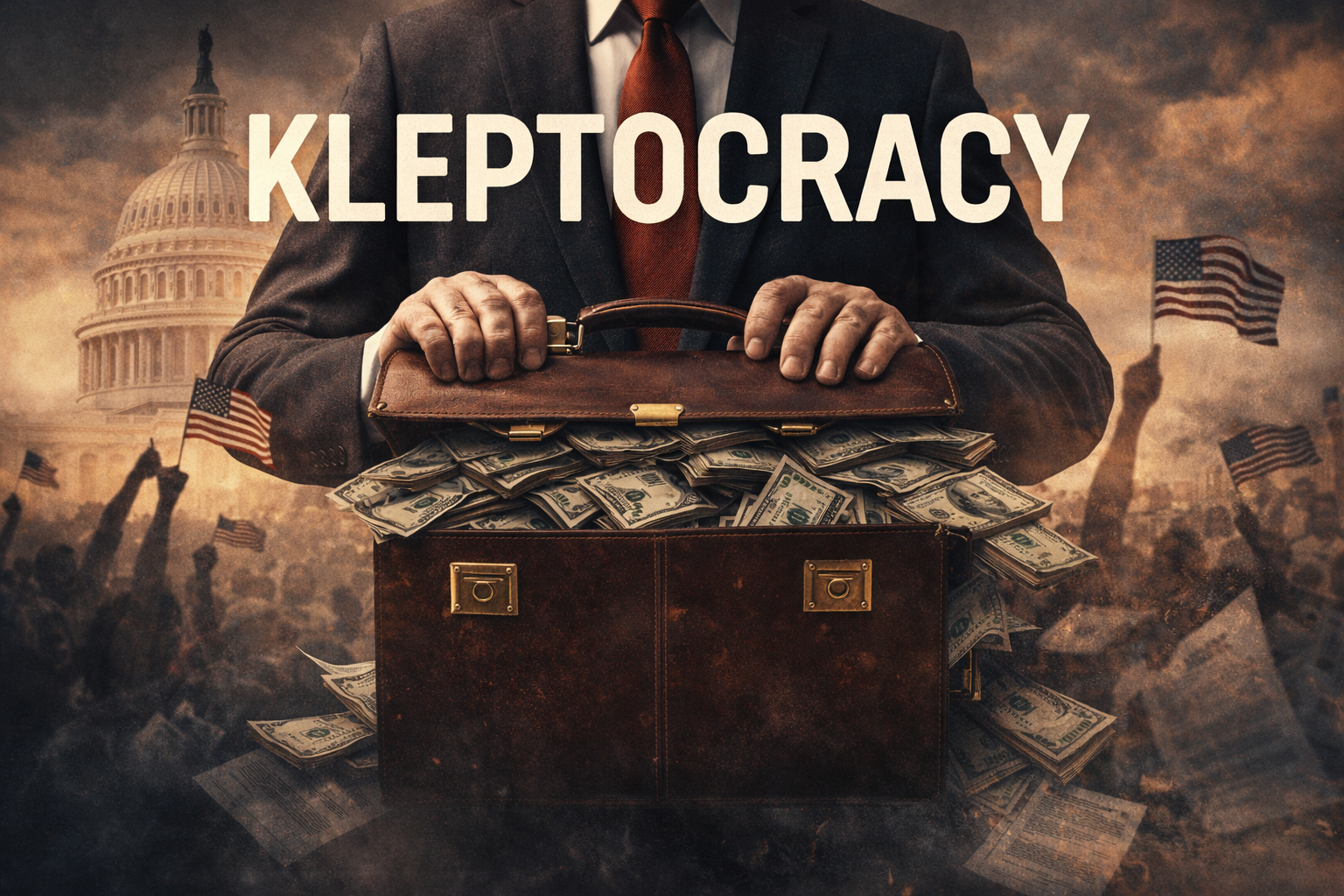
When people hear kleptocracy, they picture obvious corruption: dictators, suitcases of cash, offshore accounts. But the more durable form is subtler. A kleptocracy is a system where political power is used primarily to extract wealth and privileges for insiders—while maintaining enough legitimacy that most people tolerate it.
The core lesson isn’t “kleptocrats steal.” Everyone knows that. The real lesson is this: kleptocracy survives by earning consent sometimes genuine, often manufactured through a predictable playbook.
What Kleptocracy Actually Is (Beyond the Meme)
Kleptocracy isn’t just bribery. It’s a governing logic:
- Laws and regulations become tools to transfer value upward.
- Public institutions become channels for patronage.
- Enforcement becomes selective.
- The system retains legitimacy through order, benefits, and narratives.
In modern contexts, kleptocracy can exist without a single “villain.” It can be institutional built into incentives, lobbying pipelines, procurement systems, and rule complexity.
How Kleptocracy Gains Public Support
1) Create power asymmetry
Make accountability hard: complex rules, selective enforcement, legal shields, and insider access. Resistance becomes expensive; extraction becomes safe.
2) Redistribute just enough to look generous
Take a lot, return a visible slice through benefits, projects, jobs, and targeted relief. People feel helped—and often become dependent on the pipeline.
3) Sell “order” as the top priority
When people fear chaos, they’ll trade oversight for stability. “Only we can keep you safe” becomes a license to expand power.
4) Build an ideology that justifies it
Wrap extraction in a story: security, patriotism, morality, growth, or “our side must win.” Critics get framed as enemies, not watchdogs.
The Modern Version: Theft Without Suitcases of Cash
In advanced democracies, kleptocracy often looks like:
- regulatory capture
- revolving doors
- insider contracts
- monopoly-friendly policy
- complexity that hides winners and losers
Why It’s Relevant in America Today
America is not a pure kleptocracy. It has real checks: competitive elections, courts, investigative journalism, and civil society. But the risk is always present because the underlying incentives exist in any large, complex system.
Kleptocracy is less about villains and more about systems that make extraction profitable and accountability expensive. It wins public support by offering a blend of protection, benefits, identity, and fear enough to keep opposition divided and the majority passive.
The challenge for any democracy, including America, is staying vigilant about the incentives that quietly convert public institutions into private advantage.
Transparency isn’t enough if the public can’t act on it. The real defense is systems that make accountability easy and extraction hard.


Leave a Reply
You must be logged in to post a comment.